MY VOTING RECORD
July 2026 - June 2027
2026
JULY
Proposition: P.2026/47
My vote: FOR
REASONING
What this vote was about
The States of Deliberation voted on whether to bring into force the Armed Forces (Offences and Jurisdiction) (Bailiwick of Guernsey) Law 2018, alongside an Order in Council extending limited, technical parts of the United Kingdom's Armed Forces Act 2006 to Guernsey with local modifications. Together, these measures replace outdated 1950s military discipline laws with a modern legal framework. The Order in Council covers operational matters such as arrest powers (adapted so that Guernsey judges issue warrants and Guernsey police carry them out), while the 2018 local law handles criminal justice and court jurisdiction. The Commencement Ordinance simply sets the start date for the 2018 law as 1st August 2026.
Why I voted FOR
I voted in favour because this proposition completes work that the States approved back in 2013 and which all three island legislatures passed into law in 2019. Leaving the 2018 law dormant on the statute books serves nobody; it leaves Guernsey relying on outdated 1950s legislation for the rare occasions when military justice issues arise here. The package strikes a sound constitutional balance: Guernsey retains control over its own courts and criminal law, while technical military provisions are adapted so that local judges, local police and local insolvency procedures apply. There are no significant costs to the taxpayer, and the benefit is legal clarity and a modern framework ready if ever needed.
Overall Vote Result: CARRIED (See how the Assembly voted)
Proposition: P.2026/50
My vote: FOR
REASONING
What this vote was about
This proposition asked the States of Deliberation to approve new minimum wage rates that will take effect on the 1st of October 2026. If approved, the Adult Minimum Wage will rise from £12.60 to £13.10 per hour for workers aged 18 and over. The Young Persons' Minimum Wage will rise from £11.35 to £11.80 per hour for workers aged 16 and 17. The Committee for Employment and Social Security also decided to increase the maximum amounts that employers can deduct for providing accommodation and meals. These new rates are set out in the Minimum Wage (Prescribed Rates and Qualifications)(Guernsey)(Amendment) Regulations, 2026.
Why I voted FOR
I voted in favour of this proposition because I believe it strikes a fair balance between supporting our lowest-paid workers and protecting employment opportunities, particularly for young people. I also supported keeping the young persons' rate at 90 percent of the adult rate rather than making the two rates identical, because removing this gap could reduce entry-level job opportunities for 16 and 17 year olds in sectors like retail, hospitality and care. While I believe equal pay for equal work is an important principle, I was persuaded that making this change now without better data on the impact could harm young people's chances of getting their first job. Overall, this is a measured, evidence-based adjustment that protects vulnerable workers without placing undue strain on local businesses.
Overall Vote Result: CARRIED (See how the Assembly voted)
Proposition: P.2026/49 Sursis
My vote: FOR
REASONING
What this vote was about
The sursis sought to delay the debate on P.2026/49 until two conditions are met: first, that the new Chief Resources Officer has reported on the true state of the government's finances; and second, that the Revenue Service has cleared its backlog of 20,000 tax returns and demonstrated it can manage its existing workload, let alone a major new tax. If those conditions are not met sooner, the debate would be delayed until July 2028.
Why I voted FOR
I voted for the delay because I believe we should not commit islanders to a permanent new tax until we have exhausted every other alternatives that do not increase the cost of living for ordinary islanders. I also believe the government must first show it is serious about cutting wastes before imposing any broad based taxation. This pause gives us time to ensure that our tax system captures every area of undercontributions (especially pertaining to legal tax avoidance by high net-worth individuals), and ensure any future decision is based on solid evidence rather than wildly optimistic projections.
Overall Vote Result: LOST (See how the Assembly voted)
Proposition: Rule 24(6) Motion against P.2026/49 Amendment 3
My vote: AGAINST
REASONING
What this vote was about
This is a vote on a motion to determine whether Amendment 3 goes too far beyond the scope of the original proposition and should be blocked from debate.
Why I voted AGAINST
I don't believe Amendment 3 is out of scope, and I don't believe in stifling legitimate debate.
Overall Vote Result: LOST (See how the Assembly voted)
Proposition: P.2026/49 Amdt 3
My vote: FOR
REASONING
What this vote was about
This amendment would require the States Assembly and Constitution Committee to arrange a public referendum on tax reform. The referendum would ask islanders a single yes-or-no question: "Do you support the introduction of a goods and services tax?" The amendment directs the committee to return in October 2026 with the arrangements for holding that vote, at an estimated cost of roughly £55,000.
Why I voted FOR
I voted for this amendment because I believe a decision as significant as introducing a goods and services tax should be made directly by the people of Guernsey, not imposed by politicians alone, especially when there are still so many stones that are unturned. This issue has consumed parliamentary time and public debate for five years, and a referendum would finally provide a clear, democratic answer one way or the other. The cost of holding the vote is modest, and it ensures that any new broad-based tax has the explicit consent of the electorate.
Overall Vote Result: LOST (See how the Assembly voted)
Proposition: P.2026/49 Amdt 2
My vote: FOR
REASONING
What this vote was about
This amendment sought to delete the entire P.2026/49 package and replace it with a clear statement that Guernsey will not introduce a Goods and Services Tax. It also rescinded the previous resolutions that had directed the Committee to prepare these reforms and instructed them to halt all work on a Goods and Services Tax immediately.
Why I voted FOR
I voted in favour of this amendment because I believe a Goods and Services Tax is the wrong approach for Guernsey. Introducing a new tax on everyday goods and services would place an unacceptable burden on household budgets, particularly when many islanders are already facing cost-of-living pressures. It would also impose significant new administrative costs and complexity on local businesses. I was not prepared to support implementing a tax that I do not believe is in the best interests of our community, especially when there are so many stones still unturned. By voting for this amendment, I voted to keep our tax system simple, to protect ordinary islanders from a new layer of taxation, and to send a clear message that the States must explore alternative ways to secure our public finances without resorting to a Goods and Services Tax.
Overall Vote Result: LOST (See how the Assembly voted)
Proposition: P.2026/49 Amdt 1
My vote: FOR
REASONING
What this vote was about
The amendment rejects the P.2026/49 package and instead establishes an independent Appropriations Committee to review all government expenditure, identify which services the States must keep and which could cease or be commissioned by others, examine new taxation options, and report back by December 2026.
Why I voted FOR
I believe we must scrutinise what government delivers and how it spends money before imposing new taxes on islanders. This amendment directs an independent committee to find real, evidence-based savings and efficiencies across the whole of government, and to consider smarter ways to raise revenue if needed. It is the more fiscally responsible path: it costs a fraction of the original proposal, puts spending review ahead of tax increases, and ensures any future changes are built on robust analysis rather than aspiration.
Overall Vote Result: LOST (See how the Assembly voted)
Proposition: P.2026/49 Amdt 14
My vote: FOR
REASONING
What this vote was about
This amendment is an alternative tax reform package that rejects the proposed 3% Goods and Services Tax and the linked changes to income tax and social security. Instead, it keeps the new transport taxes and corporate tax reforms, replaces the planned International Services Entity charge with a broader Corporate Levy on registered Guernsey companies, and introduces a Visitor Levy on tourists. The amendment also strips out the costly new bureaucracy, IT systems, and compliance rules that a Goods and Services Tax would require, and pushes the decision on any future sales tax to the 2030 assurance review.
Why I voted FOR
I voted for this amendment because Guernsey needs additional revenue, but it does not need the heavy machinery of a brand-new sales tax to get it.
Overall Vote Result: LOST (See how the Assembly voted)
Proposition: Rule 24(6) Motion against P.2026/49 Amendment 17
My vote: AGAINST
REASONING
What this vote was about
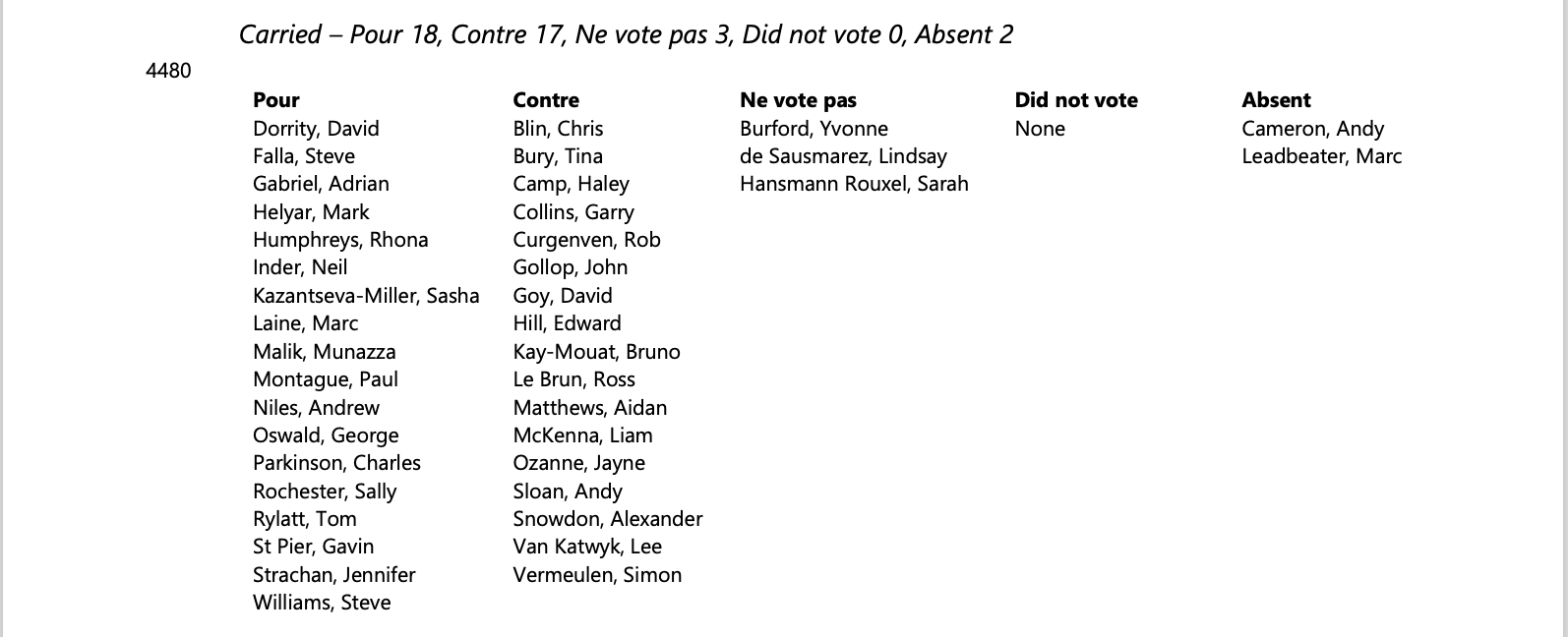
This is a vote on a motion to determine whether Amendment 17 (the Underutilised Property Levy amendment which I laid) goes beyond the scope of the original proposition and should therefore be blocked from debate.
Why I voted AGAINST
I do not believe that an amendment meant to ask the States to investigate an alternative tax is out of scope in a Tax Reform debate.
I also believe that before we even contemplate imposing broad-based taxes or austerity measures that increase the cost of living for ordinary families, we must first fix the structural gaps in our tax system and ensure that those with the greatest financial capacity contribute their fair and proportionate share.
The Underutilised Property Levy (UPL) is one of my four proposed alternatives to broad-based taxation.
Its purpose is twofold:
- to discourage the use of Guernsey's scarce housing as a passive store of wealth or a vehicle for speculation, and
- to ensure that those who choose to do so contribute a premium that reflects the opportunity cost to the wider community
The UPL is one of the levies under my Productivity Incentivisation Tax (PIT), a framework which I developed.
Sadly, all four amendments including Amendment 17, were torpedoed before they could even be debated.
Listen to the speech I delivered to the Assembly:
Click play to watch the video
Overall Vote Result: CARRIED
Note: At the point of this writing (25th August 2026), the record for this vote has not yet been found on the States Electronic Voting results page for the July meeting. So here's a screen shot of the result taken directly from the Hansard Volume 14, No. 15 (page 97):
Proposition: Rule 24(6) Motion against P.2026/49 Amendment 18
My vote: AGAINST
REASONING
What this vote was about
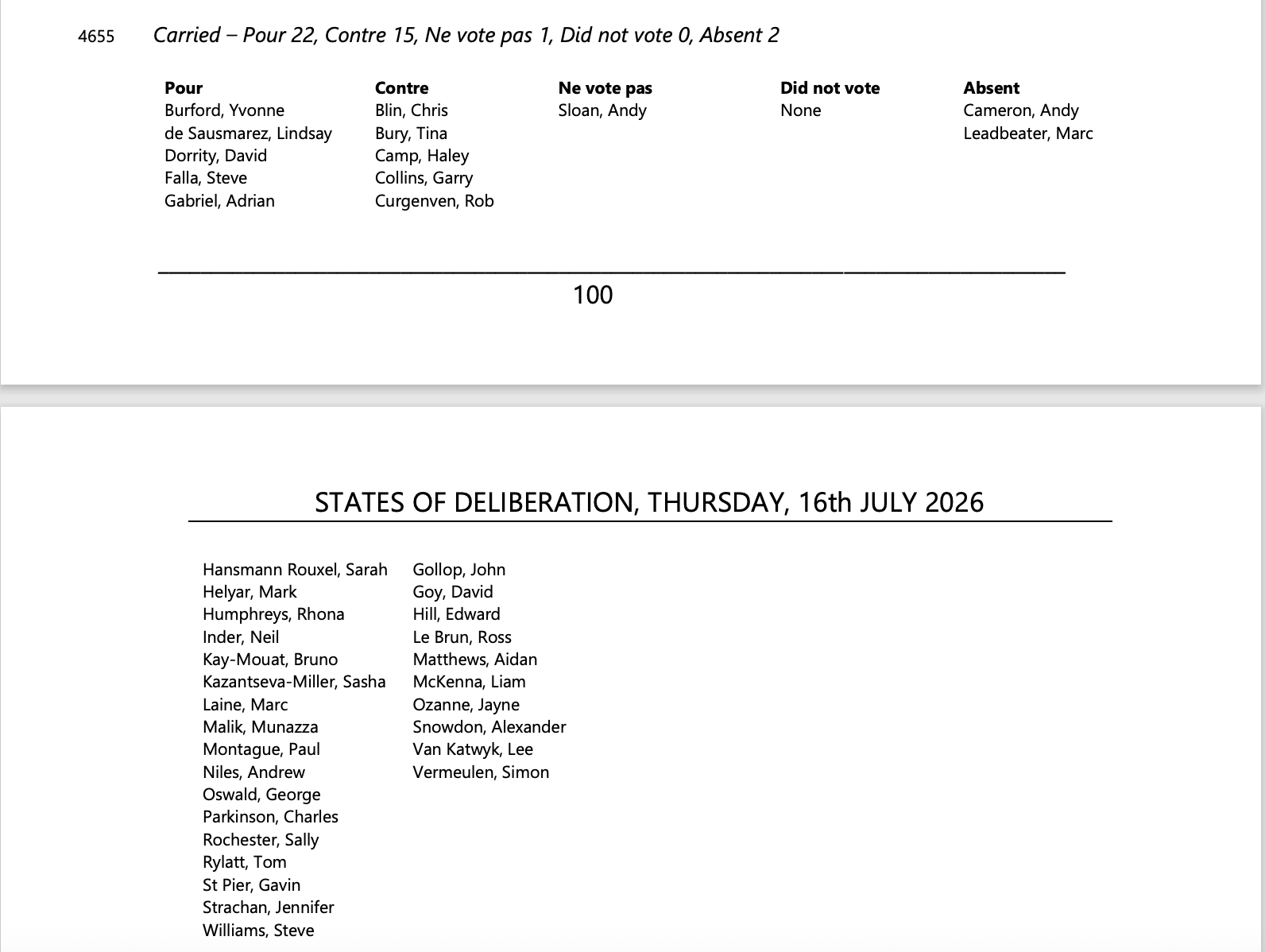
This is a vote on a motion to determine whether Amendment 18 (the Premium Road Levy amendment which I laid) goes beyond the scope of the original proposition and should therefore be blocked from debate.
Why I voted AGAINST
I do not believe that an amendment meant to ask the States to investigate an alternative tax is out of scope in a Tax Reform debate.
P&R's Transport Tax takes a broad-based approach, meaning virtually every motorist on the island would face a new annual tax. The level of that tax would then be determined by factors such as vehicle weight and emissions.
My alternative, the Premium Road Levy (PRL), takes a very different approach.
The PRL is one of the levies under my Productivity Incentivisation Tax (PIT), a framework which I developed.
Instead of taxing almost every vehicle owner, it targets only the top 10% most powerful vehicles on the island. That's the territory of ultra-luxury vehicles.
That means the overwhelming majority of islanders would never pay a single penny under my proposal, unlike P&R's Transport Tax.
The levy is also technology neutral. It is based on each vehicle's maximum net power output, not whether it is petrol, diesel, hybrid or electric. That means the approach is fair today and remains future proof as technology evolves.
Unfortunately, Amendment 18, along with my three other amendments that sought to provide alternatives to P&R's broad-based tax proposals, was prevented from even being debated.
Listen to the speech I delivered to the Assembly:
Click play to watch the video
Overall Vote Result: CARRIED
Note: At the point of this writing (25th August 2026), the record for this vote has not yet been found on the States Electronic Voting results page for the July meeting. So here's a screen shot of the result taken directly from the Hansard Volume 14, No. 15 (page 100-101):
Proposition: Rule 26(1) Motion against P.2026/49 Amendment 20
My vote: AGAINST
REASONING
What this vote was about
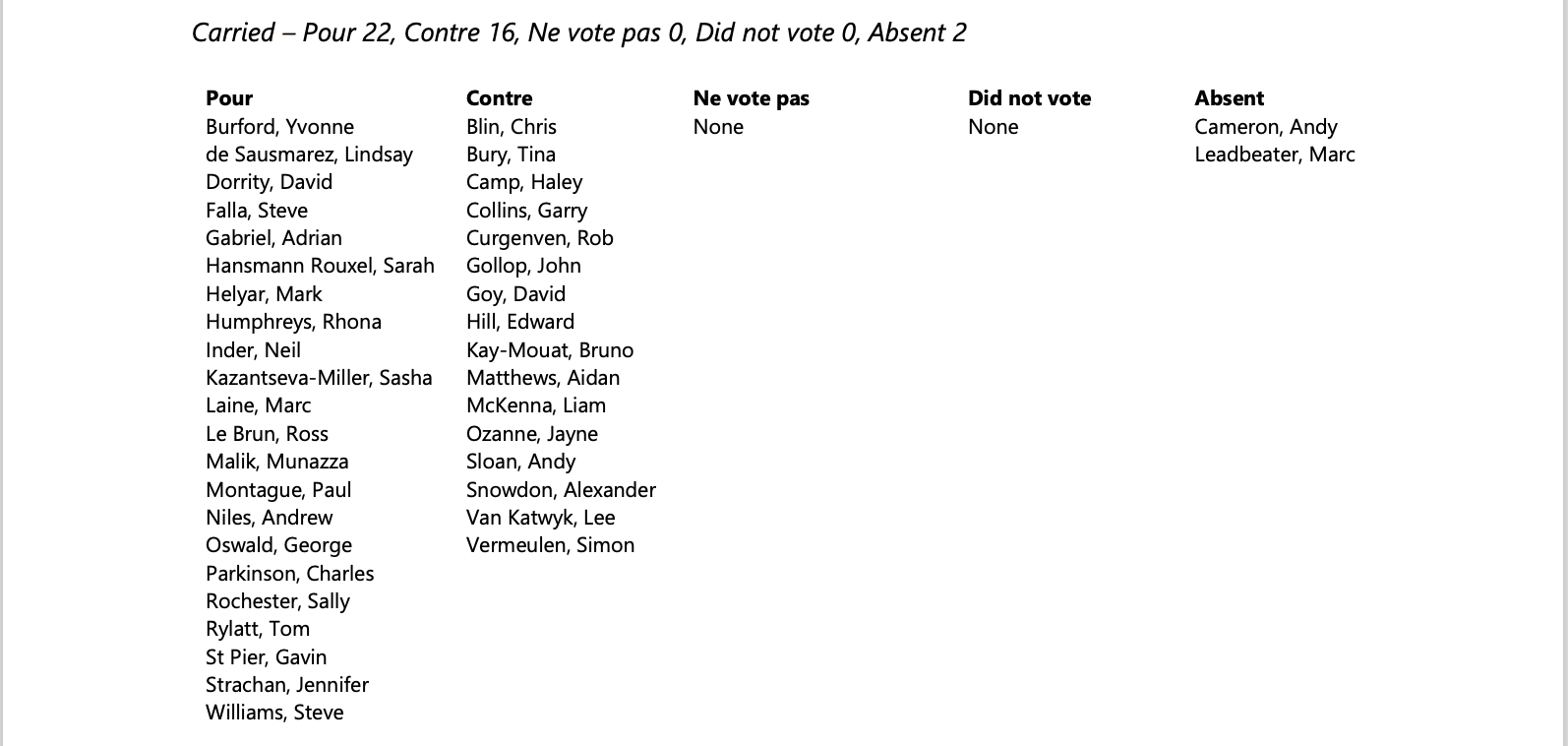
This is a vote on a motion to determine whether Amendment 20 (the High-Value Document Duty amendment which I laid) should be guillotined.
Why I voted AGAINST
I'm vehemently against any attempts to stifle debate, especially on an amendment that seeks to present an alternative to P&R's broad based taxes.
Guernsey's highest-value properties benefit from the infrastructure, public services, stability and security that we all help create.
The High-Value Document Duty (HVDD) is a proposal to ensure that those purchasing the most valuable residential properties make a proportionate contribution towards the systems that help protect those values.
The HVDD is one of the levies under my Productivity Incentivisation Tax (PIT), a framework which I developed.
The HVDD is not a tax on ordinary homes. It applies only to residential properties above £2.5 million and uses the existing Document Duty system, keeping it simple and targeted.
Those with the greatest financial capacity should have the opportunity to contribute more towards the island they call home.
Unfortunately, Amendment 20, along with my three other amendments that sought to provide alternatives to P&R's broad-based tax proposals, was prevented from even being debated. In fact, not only was Amendment 20 guillotined. Immediately after that, a Rule 24(6) motion was also launched against it to torpedo it and prevent not just debate but also a vote from being taken on it.
Listen to the speech I delivered to the Assembly:
Click play to watch the video
Overall Vote Result: CARRIED
Note: At the point of this writing (25th August 2026), the record for this vote has not yet been found on the States Electronic Voting results page for the July meeting. So here's a screen shot of the result taken directly from the Hansard Volume 14, No. 15 (page 106):
Proposition: Rule 24(6) Motion against P.2026/49 Amendment 21
My vote: AGAINST
REASONING
What this vote was about
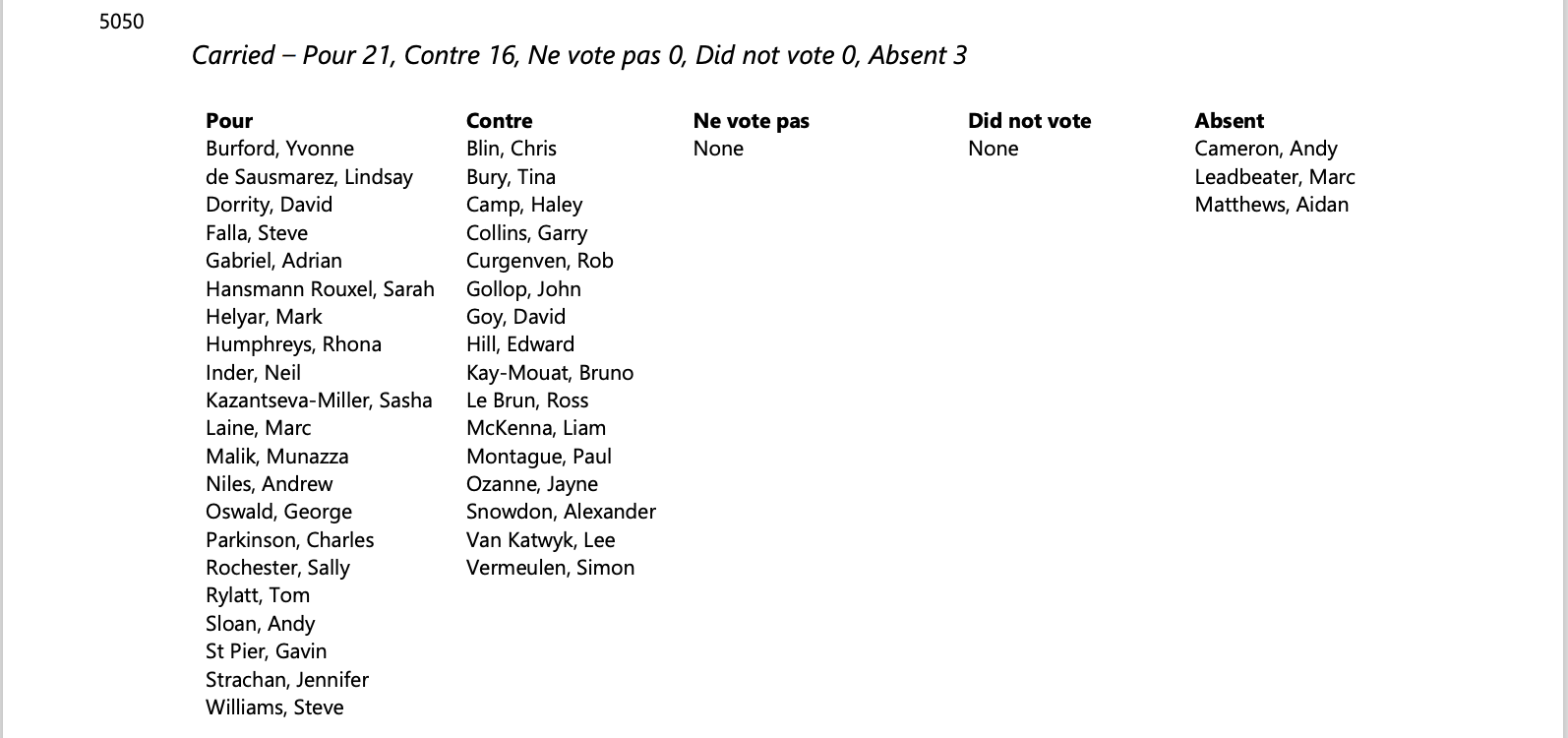
This is a vote on a motion to determine whether Amendment 21 (the Fair Contribution Levy amendment which I laid) goes beyond the scope of the original proposition and should therefore be blocked from debate.
Why I voted AGAINST
I do not believe that an amendment meant to ask the States to investigate an alternative tax is out of scope in a Tax Reform debate.
If our tax system is asking more from ordinary families, shouldn't we first ask whether everyone is already contributing proportionately?
For this reason, I believe the States should first investigate the Fair Contribution Levy (FCL) before considering broad-based taxes such as GST.
Amendment 21 is designed to address a long-standing anomaly within our tax system, where some high-net-worth individuals can legally contribute little or no income tax or social security, while ensuring that those already making a proportionate contribution are unaffected.
Fairness starts with fixing the system we already have.
Unfortunately, Amendment 21, along with my three other amendments offering practical alternatives to P&R's broad-based tax proposals, was prevented from even being debated.
Listen to the speech I delivered to the Assembly:
Click play to watch the video
Overall Vote Result: CARRIED
Note: At the point of this writing (25th August 2026), the record for this vote has not yet been found on the States Electronic Voting results page for the July meeting. So here's a screen shot of the result taken directly from the Hansard Volume 14, No. 15 (page 110):
Proposition: P.2026/49 Amdt 19
My vote: FOR
REASONING
What this vote was about
This amendment sought to remove three of the most regressive and broad-based measures from the Policy and Resources Committee's Tax Reform 2026 package. Specifically, it would strip out the proposed 3% goods and services tax, the planned increases to social security contributions, and the new and revised transport taxes. The amendment's purpose was to reject a broad based tax approach that falls heaviest on ordinary working families, and to insist that any future revenue-raising must prioritise fairness, structural integrity, and proportionate contribution from those with the greatest economic capacity.
Why I voted FOR
This was my final amendment speech of the July tax reform debate.
It was also my final opportunity to ask the Assembly to choose a different path.
The day before, I presented what I believed were four, fairer alternatives... alternatives that protected ordinary families while asking those with the greatest financial capacity to make a proportionate contribution.
But those proposals were prevented from even being debated.
So this fifth amendment was all that remained. It became my last stand against GST.
I could not support asking ordinary islanders to pay more for their weekly shop, their social security, and their vehicle, all at the same time, while the underlying gaps in our tax system remain unaddressed.
I believe sound fiscal stewardship means fixing the structural problems first... ensuring proportionate contribution from the wealthiest, and addressing tax gaps before we turn to blunt, broad-based taxes that hit ordinary families the hardest.
Listen to the speech I delivered to the Assembly:
Click play to watch the video
Overall Vote Result: LOST (See how the Assembly voted)
Proposition: P.2026/49 Amdt 25
My vote: FOR
REASONING
What this vote was about
This amendment to the Tax Reform 2026 package directed the Policy and Resources Committee to include, in its future long-term work on Guernsey's tax system, the examination of a Single Common Tax Rate Framework. This means exploring whether our main taxes, namely income tax, corporate tax, and social security contributions, could be aligned around one clear headline rate, rather than the current patchwork of different rates. The amendment does not set any rate, commit to any policy, or change the immediate reforms. It simply ensures this idea is properly considered as part of future planning.
Why I voted FOR
I voted in favour because this amendment is low-risk and costs nothing now and commits to nothing specific, but it opens the door to a simpler, more transparent tax system that could strengthen Guernsey's international competitiveness. Our current tax structure has grown complex and piecemeal over many years. Exploring whether a single headline rate could work is a reasonable step. Any detailed proposals would still need to come back to the States for full debate before anything is implemented, so this remains genuinely exploratory. I believe it is right to keep all options on the table as we plan for the island's long-term economic future.
Overall Vote Result: CARRIED (See how the Assembly voted)
Proposition: P.2026/49 Amdt 24
My vote: FOR
REASONING
What this vote was about
This was Amendment 24 to the Tax Reform 2026 package. It proposed two additions to the main reforms: first, that the Policy and Resources Committee introduce a non-means-tested Child Responsibility Tax Allowance for each dependent child within the income tax system, recognising the real costs of raising children; and second, that the Committee carry out detailed fiscal and distributional analysis using Revenue Service data before anything is implemented, looking carefully at how the new allowance would interact with existing child-related tax provisions and what the overall impact would be on the wider reform package.
Why I voted FOR
I voted FOR this amendment because the tax reform package, by the Committee's own analysis, left households with children worse off than childless households on the same income.
Beyond the question of fairness, supporting families who choose to raise children here is an investment in Guernsey's long-term future as those children are tomorrow's workforce, taxpayers, and carers.
Overall Vote Result: CARRIED (See how the Assembly voted)
Proposition: Rule 26(1) Motion against P.2026/49 Amendment 23
My vote: AGAINST
REASONING
What this vote was about
This is a vote on a motion to determine whether Amendment 23 should be guillotined.Why I voted AGAINST
I don't believe in stifling legitimate debate.
Overall Vote Result: LOST (See how the Assembly voted)
Proposition: P.2026/49 Amdt 23
My vote: AGAINST
REASONING
What this vote was about
This amendment sought to add a new rule to the Tax Reform 2026 package that would cap the growth of day-to-day government spending and social security costs at the rate of inflation for the three financial years 2027, 2028, and 2029. Capital spending on buildings and infrastructure would have been exempt, and the States could have overridden the cap if they formally agreed that exceptional circumstances applied. In short, it was an attempt to enforce spending discipline by limiting how much the government could grow its budget in real terms.
Why I voted AGAINST
I could not support this amendment because it asks government to "save money" without specifying where those savings should come from.
The reason is simple: staff costs are one of the largest expenses for most governments. And I've never met a senior manager who, after being told their department needs to make savings, immediately looks at their own six-figure salary and thinks, "Perhaps I should take a pay cut."
What usually happens instead is a hiring freeze. Frontline staff leave and are not replaced. In some cases, jobs are made redundant. The inevitable consequence is a deterioration in public services.
Another risk is that government simply withdraws subsidies for essential goods and services, passing the cost directly on to the public, all in the name of "savings".
That's why I believe we should focus first on eliminating waste and inefficiency before talking about savings. And if savings genuinely need to be made, we should be honest with the public and specify exactly where those savings should come from, rather than leaving departments to make those decisions by default.
A blanket cap sounds like fiscal responsibility, but without a clear plan for where the axe falls, it becomes a mechanism for quietly eroding the services islanders rely on. I could not support that.
Overall Vote Result: CARRIED (See how the Assembly voted)